




Roma - Il discorso di fine anno del presidente della repubblica, al suo secondo mandato - Testo integrale del discorso del presidente - VIDEO
Mattarella: “Pace è realismo, va perseguita, non basta far tacere le armi”
Roma – 31 dicembre 2023. E come di consueto il messaggio di fine anno del presidente della repubblica Sergio Mattarella.
Un discorso di auguri che ripercorre gli ultimi 12 mesi della nostra nazione tra cronaca, politica interna ed estera e grandi traguardi.
Il presidente Mattarella, eletto nel suo secondo mandato a gennaio 2022, ha poi speso parole per il futuro. Sguardo al 2024, con passione, caparbietà e fermezza.
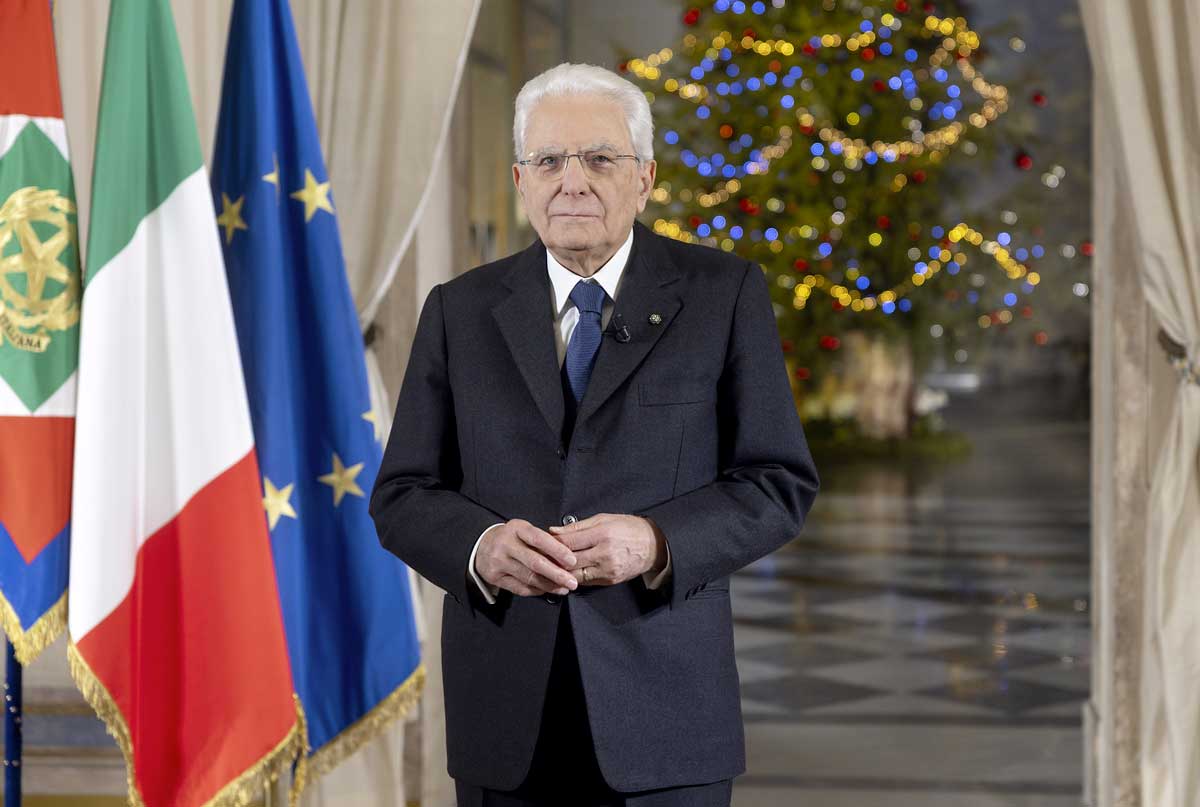
Sergio Mattarella
Il discorso del presidente Mattarella
Care concittadine e cari concittadini,
questa sera ci stiamo preparando a festeggiare l’arrivo del nuovo anno. Nella consueta speranza che si aprano giorni positivi e rassicuranti.
Naturalmente, non possiamo distogliere il pensiero da quanto avviene intorno a noi. Nella nostra Italia, nel mondo.
Sappiamo di trovarci in una stagione che presenta tanti motivi di allarme. E, insieme, nuove opportunità.
Avvertiamo angoscia per la violenza cui, sovente, assistiamo: tra gli Stati, nella società, nelle strade, nelle scene di vita quotidiana.
La violenza.
Anzitutto, la violenza delle guerre. Di quelle in corso; e di quelle evocate e minacciate.
Le devastazioni che vediamo nell’Ucraina, invasa dalla Russia, per sottometterla e annetterla.
L’orribile ferocia terroristica del 7 ottobre scorso di Hamas contro centinaia di inermi bambini, donne, uomini, anziani d’Israele. Ignobile oltre ogni termine, nella sua disumanità.
La reazione del governo israeliano, con un’azione militare che provoca anche migliaia di vittime civili e costringe, a Gaza, moltitudini di persone ad abbandonare le proprie case, respinti da tutti.
La guerra – ogni guerra – genera odio.
E l’odio durerà, moltiplicato, per molto tempo, dopo la fine dei conflitti.
La guerra è frutto del rifiuto di riconoscersi tra persone e popoli come uguali. Dotati di pari dignità. Per affermare, invece, con il pretesto del proprio interesse nazionale, un principio di diseguaglianza.
E si pretende di asservire, di sfruttare. Si cerca di giustificare questi comportamenti perché sempre avvenuti nella storia. Rifiutando il progresso della civiltà umana.
Il rischio, concreto, è di abituarsi a questo orrore. Alle morti di civili, donne, bambini. Come – sempre più spesso – accade nelle guerre.
Alla tragica contabilità dei soldati uccisi. Reciprocamente presentata; menandone vanto.
Vite spezzate, famiglie distrutte. Una generazione perduta.
E tutto questo accade vicino a noi. Nel cuore dell’Europa. Sulle rive del Mediterraneo.
Macerie, non solo fisiche. Che pesano sul nostro presente. E graveranno sul futuro delle nuove generazioni.
Di fronte alle quali si presentano oggi, e nel loro possibile avvenire, brutalità che pensavamo, ormai, scomparse; oltre che condannate dalla storia.
La guerra non nasce da sola. Non basterebbe neppure la spinta di tante armi, che ne sono lo strumento di morte. Così diffuse. Sempre più letali. Fonte di enormi guadagni.
Nasce da quel che c’è nell’animo degli uomini. Dalla mentalità che si coltiva. Dagli atteggiamenti di violenza, di sopraffazione, che si manifestano.
È indispensabile fare spazio alla cultura della pace. Alla mentalità di pace.
Parlare di pace, oggi, non è astratto buonismo. Al contrario, è il più urgente e concreto esercizio di realismo, se si vuole cercare una via d’uscita a una crisi che può essere devastante per il futuro dell’umanità.
Sappiamo che, per porre fine alle guerre in corso, non basta invocare la pace.
Occorre che venga perseguita dalla volontà dei governi. Anzitutto, di quelli che hanno scatenato i conflitti.
Ma impegnarsi per la pace significa considerare queste guerre una eccezione da rimuovere; e non la regola del prossimo futuro.
Volere la pace non è neutralità; o, peggio, indifferenza, rispetto a ciò che accade: sarebbe ingiusto, e anche piuttosto spregevole.
Perseguire la pace vuol dire respingere la logica di una competizione permanente tra gli Stati. Che mette a rischio le sorti dei rispettivi popoli. E mina alle basi una società fondata sul rispetto delle persone.
Per conseguire la pace non è sufficiente far tacere le armi.
Costruirla significa, prima di tutto, educare alla pace. Coltivarne la cultura nel sentimento delle nuove generazioni. Nei gesti della vita di ogni giorno. Nel linguaggio che si adopera.
Dipende, anche, da ciascuno di noi.
Pace, nel senso di vivere bene insieme. Rispettandosi, riconoscendo le ragioni dell’altro. Consapevoli che la libertà degli altri completa la nostra libertà.
Vediamo, e incontriamo, la violenza anche nella vita quotidiana. Anche nel nostro Paese.
Quando prevale la ricerca, il culto della conflittualità. Piuttosto che il valore di quanto vi è in comune; sviluppando confronto e dialogo.
La violenza.
Penso a quella più odiosa sulle donne.
Vorrei rivolgermi ai più giovani.
Cari ragazzi, ve lo dico con parole semplici: l’amore non è egoismo, possesso, dominio, malinteso orgoglio. L’amore – quello vero – è ben più che rispetto: è dono, gratuità, sensibilità.
Penso alla violenza verbale e alle espressioni di denigrazione e di odio che si presentano, sovente, nella rete.
Penso alla violenza che qualche gruppo di giovani sembra coltivare, talvolta come espressione di rabbia.
Penso al risentimento che cresce nelle periferie. Frutto, spesso, dell’indifferenza; e del senso di abbandono.
Penso alla pessima tendenza di identificare avversari o addirittura nemici. Verso i quali praticare forme di aggressività. Anche attraverso le accuse più gravi e infondate. Spesso, travolgendo il confine che separa il vero dal falso.
Queste modalità aggravano la difficoltà di occuparsi efficacemente dei problemi e delle emergenze che, cittadini e famiglie, devono affrontare, giorno per giorno.
Il lavoro che manca. Pur in presenza di un significativo aumento dell’occupazione.
Quello sottopagato. Quello, sovente, non in linea con le proprie aspettative e con gli studi seguiti.
Il lavoro, a condizioni inique, e di scarsa sicurezza. Con tante, inammissibili, vittime.
Le immani, differenze di retribuzione tra pochi superprivilegiati e tanti che vivono nel disagio.
Le difficoltà che si incontrano nel diritto alle cure sanitarie per tutti. Con liste d’attesa per visite ed esami, in tempi inaccettabilmente lunghi.
La sicurezza della convivenza. Che lo Stato deve garantire. Anche contro il rischio di diffusione delle armi.
Rispetto allo scenario in cui ci muoviamo, i giovani si sentono fuori posto. Disorientati, se non estranei a un mondo che non possono comprendere; e di cui non condividono andamento e comportamenti.
Un disorientamento che nasce dal vedere un mondo che disconosce le loro attese. Debole nel contrastare una crisi ambientale sempre più minacciosa. Incapace di unirsi nel nome di uno sviluppo globale.
In una società così dinamica, come quella di oggi, vi è ancor più bisogno dei giovani. Delle loro speranze. Della loro capacità di cogliere il nuovo.
Dipende da tutti noi far prevalere, sui motivi di allarme, le opportunità di progresso scientifico, di conoscenza, di dimensione umana.
Quando la nostra Costituzione parla di diritti, usa il verbo “riconoscere”.
Significa che i diritti umani sono nati prima dello Stato. Ma, anche, che una democrazia si nutre, prima di tutto, della capacità di ascoltare.
Occorre coraggio per ascoltare. E vedere – senza filtri – situazioni spesso ignorate; che ci pongono di fronte a una realtà a volte difficile da accettare e affrontare.
Come quella di tante persone che vivono una condizione di estrema vulnerabilità e fragilità; rimasti isolati. In una società pervasa da quella “cultura dello scarto”, così efficacemente definita da Papa Francesco.
Cui rivolgo un saluto e gli auguri più grandi. E che ringrazio per il suo instancabile Magistero.
Affermare i diritti significa ascoltare gli anziani. Preoccupati di pesare sulle loro famiglie; mentre il sistema assistenziale fatica a dar loro aiuto.
Si ha sempre bisogno della saggezza e dell’esperienza. E di manifestare rispetto e riconoscenza per le generazioni precedenti. Che, con il lavoro e l’impegno, hanno contribuito alla crescita dell’Italia.
Affermare i diritti significa prestare attenzione alle esigenze degli studenti, che vanno aiutati a realizzarsi. Il cui diritto allo studio incontra, nei fatti, ostacoli. A cominciare dai costi di alloggio nelle grandi città universitarie; improponibili per la maggior parte delle famiglie.
Significa rendere effettiva la parità tra donne e uomini: nella società, nel lavoro, nel carico delle responsabilità familiari.
Significa non volgere lo sguardo altrove di fronte ai migranti.
Ma ascoltare significa, anche, saper leggere la direzione e la rapidità dei mutamenti che stiamo vivendo. Mutamenti che possono recare effetti positivi sulle nostre vite.
La tecnologia ha sempre cambiato gli assetti economici e sociali.
Adesso, con l’intelligenza artificiale che si autoalimenta, sta generando un progresso inarrestabile. Destinato a modificare profondamente le nostre abitudini professionali, sociali, relazionali.
Ci troviamo nel mezzo di quello che verrà ricordato come il grande balzo storico dell’inizio del terzo millennio. Dobbiamo fare in modo che la rivoluzione che stiamo vivendo resti umana. Cioè, iscritta dentro quella tradizione di civiltà che vede, nella persona – e nella sua dignità – il pilastro irrinunziabile.
Viviamo, quindi, un passaggio epocale. Possiamo dare tutti qualcosa alla nostra Italia. Qualcosa di importante. Con i nostri valori. Con la solidarietà di cui siamo capaci.
Con la partecipazione attiva alla vita civile.
A partire dall’esercizio del diritto di voto.
Per definire la strada da percorrere, è il voto libero che decide. Non rispondere a un sondaggio, o stare sui social.
Perché la democrazia è fatta di esercizio di libertà.
Libertà che, quanti esercitano pubbliche funzioni – a tutti i livelli -, sono chiamati a garantire.
Libertà indipendente da abusivi controlli di chi, gestori di intelligenza artificiale o di potere, possa pretendere di orientare il pubblico sentimento.
Non dobbiamo farci vincere dalla rassegnazione. O dall’indifferenza. Non dobbiamo chiuderci in noi stessi per timore che le impetuose novità che abbiamo davanti portino soltanto pericoli.
Prima che un dovere, partecipare alla vita e alle scelte della comunità è un diritto di libertà. Anche un diritto al futuro. Alla costruzione del futuro.
Partecipare significa farsi carico della propria comunità. Ciascuno per la sua parte.
Significa contribuire, anche fiscalmente. L’evasione riduce, in grande misura, le risorse per la comune sicurezza sociale. E ritarda la rimozione del debito pubblico; che ostacola il nostro sviluppo.
Contribuire alla vita e al progresso della Repubblica, della Patria, non può che suscitare orgoglio negli italiani.
Ascoltare, quindi; partecipare; cercare, con determinazione e pazienza, quel che unisce.
Perché la forza della Repubblica è la sua unità.
L’unità non come risultato di un potere che si impone.
L’unità della Repubblica è un modo di essere. Di intendere la comunità nazionale. Uno stato d’animo; un atteggiamento che accomuna; perché si riconosce nei valori fondanti della nostra civiltà: solidarietà, libertà, uguaglianza, giustizia, pace.
I valori che la Costituzione pone a base della nostra convivenza. E che appartengono all’identità stessa dell’Italia.
Questi valori – nel corso dell’anno che si conclude – li ho visti testimoniati da tanti nostri concittadini.
Li ho incontrati nella composta pietà della gente di Cutro.
Li ho riconosciuti nella operosa solidarietà dei ragazzi di tutta Italia che, sui luoghi devastati dall’alluvione, spalavano il fango; e cantavano ‘Romagna mia’.
Li ho letti negli occhi e nei sorrisi, dei ragazzi con autismo che lavorano con entusiasmo a Pizza aut. Promossa da un gruppo di sognatori. Che cambiano la realtà.
O di quelli che lo fanno a Casal di Principe. Laddove i beni confiscati alla camorra sono diventati strumenti di riscatto civile, di impresa sociale, di diffusione della cultura. Tenendo viva la lezione di legalità di don Diana.
Nel radunarsi spontaneo di tante ragazze, dopo i terribili episodi di brutalità sulle donne. Con l’intento di dire basta alla violenza. E di ribellarsi a una mentalità di sopraffazione.
Li vedo nell’impegno e nella determinazione di donne e uomini in divisa. Che operano per la nostra sicurezza. In Italia, e all’estero.
Nella passione civile di persone che, lontano dai riflettori della notorietà, lavorano per dare speranza e dignità a chi è in carcere.
O di chi ha lasciato il proprio lavoro – come è avvenuto – per dedicarsi a bambini, ragazzi e mamme in gravi difficoltà.
A tutti loro esprimo la riconoscenza della Repubblica.
Perché le loro storie raccontano già il nostro futuro.
Ci dicono che uniti siamo forti.
Buon anno a tutti!
Sergio Mattarella
La versione inglese
Dear fellow citizens,
tonight we are preparing to celebrate the advent of the new year, hoping – as usual – that positive and reassuring days will follow.
We obviously cannot ignore, however, what is going on around us. In Italy and across the world.
We are aware that we are going through a period that is alarming, for a number of reasons. Yet it is a spell that also offers new opportunities.
We anguish over the violence we often witness: violence between States, violence in society, violence in everyday life.
Violence.
Above all, the violence of wars. The violence of the wars that are underway and of the wars that are being evoked and threatened.
The devastation suffered by Ukraine, invaded by Russia with the intent of subduing and annexing it.
The atrocious ferocity of terrorism we saw on 7 October, when Hamas attacked hundreds of defenceless Israeli children, women, men and elderly. An unspeakable, despicable, inhumane attack.
The reaction of the Israeli government, with a military action that is causing thousands of casualties among civilians, forcing many people in Gaza to leave their homes. People who are rejected by all.
War – every war – generates hatred.
And there will be enduring and mounting hatred once the conflicts are over.
War stems from the refusal of acknowledging that people and peoples are equal and all have equal dignity. It stems from the desire to affirm a principle of inequality, using to national interest as an excuse.
And some expect to subjugate and exploit. Some try to justify such an approach simply because it has happened previously in history, thereby rejecting the progress of human civilisation.
The real risk is getting used to this horror, to the death of civilians, women, children. Which is what is happening – more and more often – in wars.
Getting used to the tragic loss of soldiers – whose killing is reciprocally presented and flauntedby the parties to the conflict.
Broken lives, broken families. A lost generation.
All this is happening close to us. In the very heart of Europe and on the shores of the Mediterranean.
This rubble, which is not only physical, is burdening our present and will burden the future of the new generations, who witness today – and might have to witness in future – cruelties condemned by history and that we thought belonged to the past.
War does not self-generate. Nor is it triggered by the many weapons that represent its deadly instrument. Weapons that are becoming more widespread and increasingly lethal. Weapons that are a huge source of revenue. No, all of this is not enough to start a war.
A war is started by what resides in the souls of men. By the mindset that is fostered. By the violent and oppressing attitudes that arise.
Making way for the culture and mentality of peace is paramount.
Speaking of peace today is not hypocritical do-goodism. Quite the contrary. It’s the most pressing and tangible exercise of realism we must perform if we are to find a way to overcome a crisis that could devastate the future of mankind.
We know that calling for peace is not sufficient to put an end to the ongoing wars.
Peace must be pursued by governments and their will. Above all, by the governments that sparked the conflicts.
But working for peace also means viewing these wars as an exception to be wiped out, not as the rule of the near future.
Wanting peace does not mean neutrality or, worse still, being unresponsive to what is happening. That would be wrong and somewhat despicable.
Striving to achieve peace means rejecting the idea of a permanent competition between states, which jeopardises the fate of the peoples involved and undermines the foundations of a society based on respect for individuals.
Silencing the guns is not enough to attain peace.
Building peace means, above all, educating for peace. Fostering the culture of peace in the hearts of the new generations, in everyday actions, in the words that are spoken.
It also depends on each and every single one of us.
Peace, intended as a peaceful coexistence. Living well together, respecting one another, acknowledging the other person’s reasons. Being aware that the freedom of other people complements our own freedom.
In Italy too we witness and experience violence in everyday life, when the search for conflict, the idea of conflict prevail over the values we share, which – on the contrary – can lead to discussion and dialogue.
Violence.
I’m thinking of the most hateful form of violence: that against women.
Allow me to turn to our youths.
Dear girls and boys, let me speak plainly: love is not selfishness, possession, misinterpreteddominance, pride. Love – real love – is much more than respect: it is gift, it’s gratuitousness, it’s sensitivity.
I’m thinking of verbal violence, of the disparaging expressions and hate speech that are often found on the Internet.
I’m thinking of the violence that some groups of youngsters seem to cultivate, sometimes as an expression of rage.
I’m thinking of the growing resentment in our suburbs, which often results from indifference and a from a sense of abandonment.
I’m thinking of the dreadful trend of identifying the others as adversaries or, worse still, enemies, against whom one must be aggressive. Even by spreading groundless and serious accusations, often overstepping the boundary separating what is true from what is false.
This approach compounds the difficulties of effectively dealing with the problems and emergencies that citizens and families must address on a daily basis.
The lack of jobs – despite a significant increase in employment.
Underpaid work and work that is not consistent with one’s expectations and educational background.
Unsafe work, under unfair conditions too. And many, unacceptable deaths on the job.
The huge pay gap between the few super-privileged and the many who experience hardship.
The difficulties in ensuring the right to healthcare for all and the unacceptablelengthy waiting lists for visits and examinations.
A safe coexistence – something the State must guarantee. Even countering the risk of the spread of firearms.
In such a scenario, young people feel out of place. Disoriented, perhaps even alienated from a world they fail to understand and whose trends and behaviour they do not share.
A disorientation caused by a world that ignores their expectations: weak when addressing and countering an environmental crisis that is becoming a mounting threat and unable to unite for the sake of global development.
A dynamic society such as the current one increasingly needs young people and their hopes and ability to grasp what is new.
The opportunities for scientific progress, knowledge and the human dimension must prevail over the reasons for being alarmed. And it’s up to us to make that happen.
When our Constitution mentions rights, it uses the verb “recognise”.
This means that human rights were born before the State. And it also means that a democracy is based, above all else, on the ability to listen.
Courage is required to listen and to see – without filters – situations that are often overlooked, that pit us against a reality that is sometimes hard to accept and tackle.
Such is the reality of many people whose situation is particularly vulnerable and fragile. The sidelined, in a society permeated by the “culture of waste”, so aptly described by Pope Francis, to whom I extend my greetings and best wishes. And whom I thank for his tireless Magisterium.
Affirming rights also means listening to the elderly, who worry about being a burden for their families while the welfare system hardly supports them.
We always need wisdom and experience. Just as we must show respect and gratitude to the previous generations, whose work and commitment have contributed to the country’s growth.
Affirming rights means paying attention to the needs of students, who must be helped to fulfil themselves; whose right to study is, indeed, being hindered. Starting with the cost of accommodation in large university cities – unaffordable for most families.
It means fully implementing equality between women and men: in society, at work, in the distribution of household responsibilities.
It means not turning a blind eye to migrants.
And it also means being able to interpret the direction of the swift changes we are experiencing. Changes that can affect our lives positively.
Technology has always changed economic and social structures.
Now, a self-sufficient Artificial Intelligence is driving a relentless progress that is bound to deeply modify our professional, social and relational habits…
We are in the midst of what will be remembered as the great historical leap of the dawn of the third millennium. We must make sure that the revolution we are experiencing remains human. Meaning that it must stay within the bounds of a traditional civilisation, whose irreplaceable pillar is the human being and their dignity.
We are therefore going through a history-making transition. We can all play our part for our country, Italy. We can all do something important, resorting to our values and to the solidarity we are capable of providing.
By actively taking part in civic life.
Starting by exercising our right to vote.
The path to be followed is paved by freely going to the polls. Not by taking part in a survey or appearing on the social media.
Because exercising freedoms is what forms a democracy.
And those who hold public offices – at all levels – must always ensure such freedoms.
These freedoms must be independent of abusive control by those who can claim to direct public sentiment by managing artificial intelligence or power.
We must never give in to resignation or indifference. We must not close in on ourselves fearing that the impetuous novelties we face will carry dangers only.
Participating in community life and decisions is not just a duty; above all, it’s a right granted byfreedom. And a right to the future – to shaping the future.
Participating means taking responsibility for one’s own community. Everyone must play their part.
It means contributing – in terms of taxes too. Tax cheating greatly reduces the pooled resources for common social security and it delays the writing off of the public debt – which greatly hinders our development.
Contributing to the life and progress of the Republic, of the Homeland, can only make the Italian people proud.
Hence, listen, participate. Patiently and painstakingly look for what can unite us.
Because the Republic’s strength lies in its unity.
Unity not intended as the result of a power that is imposed.
The unity of the Republic is a way of being, of understanding the national community. It’s a frame of mind, an attitude that unites. For it recognises the founding values of our civilisation: solidarity, freedom, equality, justice, peace.
These are the values that, according to our Constitution, underpin our coexistence. And that belong to Italy’s very identity.
Throughout the year that is drawing to a close, I have seen these values in the actions of many of our fellow citizens.
I saw them in the composed compassion of the people of Cutro.
I saw them in the diligent solidarity of youths from all over Italy who, on the sites devastated by the flood, were shovelling mud and singing “Romagna mia”.
I saw them in the eyes and smiles of autistic youths who worked with great enthusiasm at PizzAut, set up by a handful of dreamers, who truly change reality.
I saw them in those who are changing things in Casal di Principe, where the assets seized from the Camorra mob have become instruments for a civil redemption, for social enterprise, for spreading culture, always upholding the lawfulness taught by the parish priest Don Diana.
I saw them in the spontaneous gatherings of many young women after the brutal acts of violence against women. They got together to say: let’s put an end to violence. To rise up against a mentality of oppression.
I saw them in the commitment and resolve of the women and men of our law enforcement agencies, who work to ensure our security. In Italy and abroad.
I saw them in the civil passion of people who – far from the spotlight – work to give hope and dignity to inmates.
And I saw them in those who left their jobs – and they did – to devote themselves to children, youngsters and mothers experiencing hardship.
On behalf of the Republic, I thank them all.
Because their stories already tell our future.
They tell us that when we are united, we are strong.
Happy new year to everyone!
Sergio Mattarella
31 dicembre, 2023
Copyright Tusciaweb srl - 01100 Viterbo - P.I. 01994200564PRIVACY POLICY